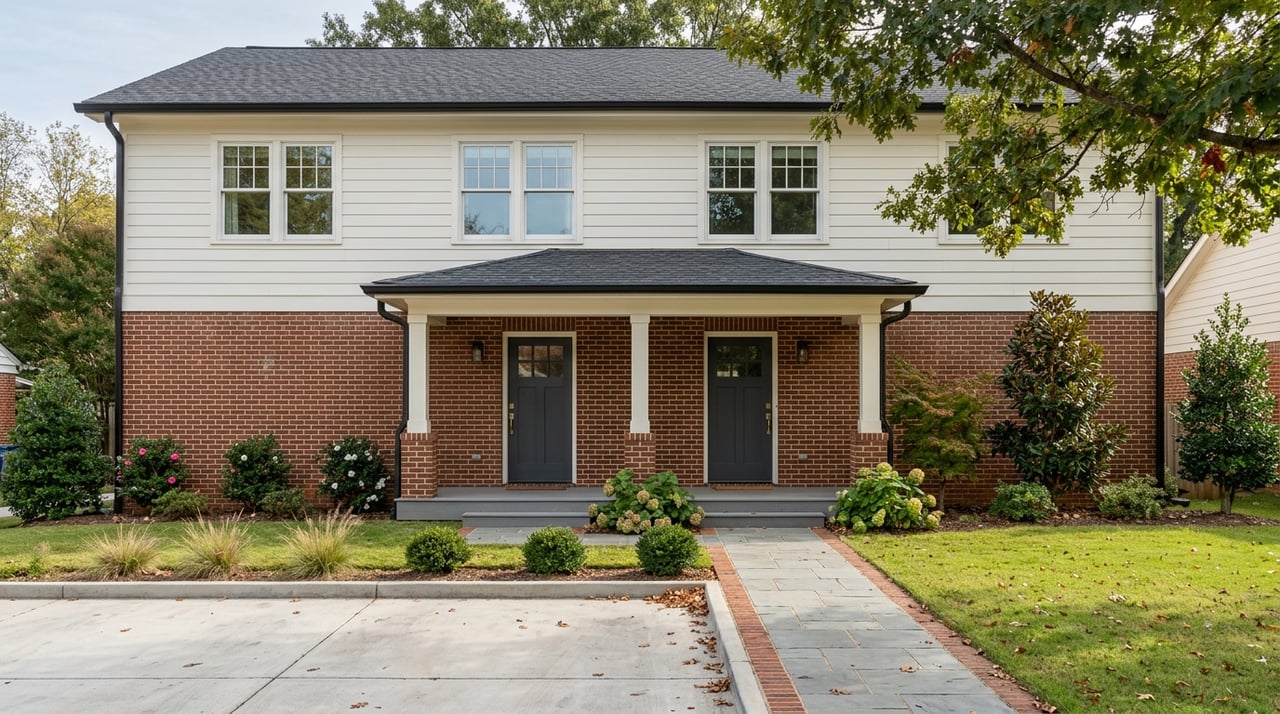
Your Guide to a Charlotte Small Rental Portfolio
April 23, 2026
April 23, 2026
Thinking about buying your first rental in Charlotte? You are not alone, and you are also right to be careful. Charlotte has the kind of population and job growth that can support a small rental portfolio, but your results can look very different depending on where you buy, what you buy, and how conservatively you run the numbers. This guide will help you think through the tradeoffs, compare a few local submarkets, and build a practical plan for your first one to three purchases. Let’s dive in.
Charlotte gives first-time investors something important: scale. The Charlotte-Concord-Gastonia metro added more than 61,000 residents between 2023 and 2024, and U.S. Census reporting on metro trends points to continued growth momentum across the region.
Jobs matter too, because rental demand usually follows employment. Charlotte’s economic indicators showed MSA nonfarm employment up 2.8% year over year in July 2025, adding 38,700 jobs, while inventory also rose and homes took longer to sell. That mix can create more buying opportunities, especially if you want to move carefully instead of rushing into a deal.
At the same time, you should not assume every rental will lease quickly at top-of-market rent. In Zillow’s October 2025 rent report, Charlotte’s typical asking rent was $1,760, with single-family homes at $2,227 and multifamily at $1,779. The same report showed 62.5% of listings offering concessions, which is a clear sign to underwrite with cushions.
Before you look at listings, decide what “success” means for your first one to three properties. Some buyers want stronger monthly cash flow. Others are comfortable with lower yield if they believe a location offers better long-term appreciation or fits their lifestyle goals.
In Charlotte, that choice matters a lot because the market is highly segmented. A premium in-town zip code can post high rents and still underperform on yield because home values are so much higher. A more value-oriented area may offer more breathing room for repairs, taxes, insurance, and vacancy.
A small Charlotte rental portfolio is often less about the city as a whole and more about choosing the right submarket. One of the fastest ways to screen areas is to compare gross annual rent to purchase price before you go deeper into full underwriting.
These are rough gross indicators, not cap rates. Still, they are useful because they show where the math may be easier or harder on day one.
| Area | Average Rent | Typical Home Value | Rough Gross Rent-to-Value |
|---|---|---|---|
| Charlotte city | -- | -- | 5.0% |
| 28216 | $1,767 | $320,932 | 6.6% |
| 28262 | $1,547 | $344,752 | 5.4% |
| Huntersville 28078 | $1,955 | $541,647 | 4.3% |
| 28277 | $1,986 | $614,473 | 3.9% |
| Fort Mill | $1,730 | $527,208 | 3.9% |
| 28203 | $1,948 | $685,966 | 3.4% |
| 28207 | $2,539 | $1,606,993 | 1.9% |
The takeaway is simple: Charlotte portfolio strategy is largely a location strategy. Areas like 28216 and 28262 tend to look more workable for a first buy when you care about monthly performance. Premium areas like 28203 and 28207 may fit better if your goal leans more toward appreciation or lifestyle positioning.
If you want the math to be more forgiving, start by studying in-city value pockets. In 28216, average rent is $1,767 against a typical home value of $320,932, which works out to a rough 6.6% gross rent-to-value ratio. In 28262, average rent is $1,547 with a typical home value of $344,752, or about 5.4%.
Those figures do not guarantee positive cash flow, but they often give you more room to absorb real-world expenses. For a first investor, that extra margin can matter more than chasing a trendy zip code.
Core neighborhoods can still be appealing, but usually for different reasons. In 28203, average rent is $1,948 and typical home value is $685,966, for a rough 3.4% ratio. In 28207, average rent is $2,539 and typical home value is $1,606,993, for a rough 1.9% ratio.
This is why higher rent does not always mean a better investment. In these areas, price-to-rent spreads often point to a thinner yield profile, so you need to be honest about your goals before buying.
Suburbs can make sense if you are focused on a different kind of tenant profile and a steadier long-term hold. In Huntersville 28078, average rent is $1,955 and typical home value is $541,647, for a rough 4.3% ratio. In Fort Mill, average rent is $1,730 and typical home value is $527,208, or about 3.9%.
These areas also skew more owner-occupied. Census QuickFacts for Huntersville shows a 71.7% owner-occupied housing rate, while Fort Mill is at 83.4%. That does not make them better or worse, but it does suggest a different rental strategy than a more renter-heavy part of Charlotte.
For a first portfolio, simpler is usually better. A house, townhome, or condo can all work, but the right fit depends on your budget, the local rent-to-value relationship, and any ongoing community costs.
Condos and townhomes can look attractive because the entry price may be lower than a detached home in the same area. But if the property sits in a governed community, HOA dues and rules can change the deal quickly. That is especially important in Charlotte, where some premium areas already show weaker yield even before you factor in association costs.
This is where many first investors get into trouble. They start with the highest advertised rent, assume quick occupancy, and forget about the costs that show up every single month.
A more practical first-pass model should start with market rent and subtract:
Given Charlotte’s softer rent growth and high concession share, it is smart to build in slack. If your numbers only work under perfect conditions, the deal probably is not strong enough for a first purchase.
If you are considering a condo, townhome, or single-family home in a governed community, review the HOA details early. Under North Carolina law, applicable sales require an owners’ association and mandatory covenants disclosure statement that identifies whether the property is subject to association regulation and outlines assessments or dues. You can review the statute in North Carolina General Statute 47E-4.
That matters because HOA rules and fees are not small details for rental owners. They can affect your monthly costs, leasing flexibility, and overall risk. In other words, HOA review should happen before you fall in love with the listing.
Commute patterns can help you evaluate tenant appeal, but averages only tell part of the story. Charlotte city QuickFacts show a mean travel time to work of 24.7 minutes, compared with 27.1 minutes in Huntersville and 26.3 minutes in Fort Mill.
Those numbers are fairly close, which means route-level testing matters more than broad averages. If a property looks good on paper, it is worth checking actual drive times during peak traffic before you commit.
Ownership mix also helps frame demand. Charlotte city is 51.0% owner-occupied, while Mecklenburg County is 55.1%, Huntersville is 71.7%, and Fort Mill is 83.4%. That suggests Charlotte’s core is more renter-heavy, while suburban markets lean more owner-occupied.
Starting small does not mean thinking small. It means building a base you can repeat.
Here is a simple way to approach your first portfolio:
That process can help you avoid the most common first-time mistake: buying a property that looks exciting, but does not fit your actual strategy.
You do not need the “perfect” Charlotte rental to get started. You need a property that fits your budget, supports a conservative plan, and gives you room to learn without too much strain.
For many first investors, that means focusing on the parts of Charlotte where the rent-to-value relationship is more favorable and the tenant base is broad. For others, it may mean accepting lower yield in exchange for a more specific long-term goal. The key is knowing the difference before you buy.
If you want help narrowing your search, comparing neighborhoods, and pressure-testing a first rental purchase in the Charlotte area, LaRay Hampton can help you build a smart, grounded plan for your next move.
Stay up to date on the latest real estate trends.
Known for her personalized approach and dedication, LaRay ensures a seamless buying or selling process. Trust her to provide attentive, professional service and skillful negotiation to achieve your real estate goals.