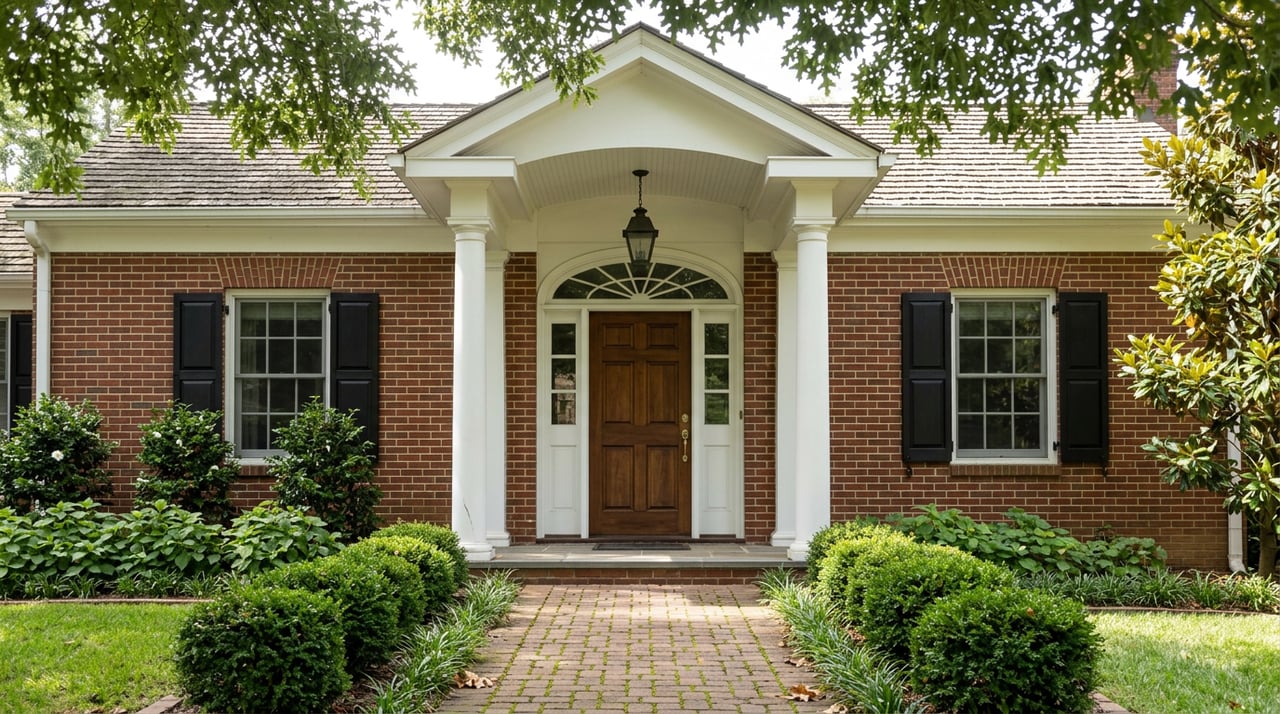
Fort Mill SC Property Tax Exemption Before Closing
August 20, 2026
August 20, 2026
The bill usually lands six to nine months after closing, long after the moving boxes are broken down and the last picture is hung. It's higher than the number the closing attorney estimated, and it rarely matches what the seller was paying the year before. Most new Fort Mill homeowners open it, assume York County made a mistake, and start calling around asking who to fight. Almost nobody made a mistake. Two separate resets happened the moment the deed recorded, and only one of them was ever optional.
Buying a home in York County doesn't just change your address. It resets your property's assessed value to what you paid for it, regardless of what the seller had been carrying on the books, and it resets the rate applied to that value from the resident-friendly discount down to the higher default rate, unless you tell the county in writing not to. The first reset is automatic and entirely out of your hands. The second is a form, a deadline, and two documents most people already have in a wallet or a glove compartment.
South Carolina counties reappraise a property at its current market rate once it changes hands, applying that new figure starting the following tax year. A seller who bought their Fort Mill home a decade ago, before the neighborhood's growth pushed values up, may have been paying tax on an assessment far below what the home is actually worth today. Buy that same house and York County resets the number to reflect your purchase, not their history. That gap between the seller's old bill and your new one is often the first surprise, and it isn't a billing error. It's how the system is designed to work.
The part that catches people is the second reset, layered on top of the first. South Carolina taxes an owner-occupied primary residence at 4% of fair market value. Every other kind of residential property, a second home, a rental, a vacation property, gets taxed at 6%. That's not a small gap. It means a home billed at the non-owner rate carries an assessed value 50% higher than the exact same home billed correctly as a primary residence, even before any millage is applied.
Here's the part almost nobody explains at closing: the 4% rate is not automatic just because you live there. You have to apply for it with the York County Assessor's office, and the standard proof is a South Carolina driver's license and vehicle registration showing your new Fort Mill address. Skip it, or get delayed by paperwork from an out-of-state DMV, and the county has no way of knowing you're an owner-occupant. You get billed at 6% on a freshly reassessed market value, which means both resets are working against you at the same time.
A homeowner who never files that application pays exactly the same millage rate as everyone else on the street. What changes is the assessment ratio underneath it, and that's a 50% swing hiding inside a single missed form.
For context on the dollars involved, York County's real estate millage for the 2026 tax cycle runs a few tenths of a percent, but it applies to whichever assessed value the county has on file. Correctly filed as a primary residence, a Fort Mill home carries an effective property tax rate of roughly 0.84%, the highest median rate anywhere in York County, compared to a countywide median closer to 0.71% and a low of 0.48% out in Edgemoor. Miss the filing window and that same Fort Mill home is effectively taxed as if it sat in the 6% tier, which functions like paying one and a half times the rate everyone around you is paying, until the paperwork catches up.
Even after the Legal Residence paperwork is filed correctly, Fort Mill itself doesn't have one property tax rate. It has several, stacked by ZIP code, because school district levies and special assessment districts layer differently across the town.
| Fort Mill ZIP Code | Median Effective Property Tax Rate |
|---|---|
| 29708 | 0.71% |
| 29715 | 0.87% |
That's a 0.16 percentage point spread inside the same town, and it isn't noise. On a $500,000 home, the difference between those two rates works out to roughly $800 a year, every year, for as long as you own the house. Two buyers who each correctly file for the owner-occupied rate, close on comparably priced homes, and never miss a deadline can still end up with meaningfully different tax bills, purely because of which side of an assessment district line their lot happens to fall on.
There's a second, unrelated tax reset that trips up relocating buyers even more often than the property tax paperwork, mostly because it doesn't come from the tax assessor at all. South Carolina charges an annual personal property tax on every registered vehicle, calculated against 6% of the vehicle's retail value and multiplied by the local millage rate. You have to pay it before you can register the car or renew a plate, and new residents get 45 days from their move-in date to handle it.
For a household bringing two vehicles from a state with no comparable vehicle tax, Florida and much of the northeast among them, that first year can add several hundred dollars in a bill nobody budgeted for, arriving through the DMV rather than the mailbox that usually carries property tax notices. It's a separate system, triggered by residency rather than the closing, and it tends to surprise people precisely because they're braced for the property tax reset and haven't heard there's a second one waiting at the license plate counter.
What happens if I miss the deadline to file for the 4% rate? You'll be billed at the 6% ratio for that tax year on the newly reassessed value. Filing later corrects the rate going forward, but it typically doesn't refund the year already billed, which is why timing this before or immediately after closing matters more than most closing checklists suggest.
Does the 4% rate apply if Fort Mill is a second home for me? No. The discount is reserved specifically for an owner-occupied primary residence. A vacation home, an investment property, or anything you rent out gets assessed at the 6% ratio regardless of when or how carefully you file.
Will my first tax bill match what the seller was paying? Rarely. The county resets the assessed value to current market rate once ownership changes, so a seller who'd owned the home for years at an older, lower assessment was almost certainly paying less than what your first full-year bill will reflect.
None of this is a reason to avoid Fort Mill. It's a reason to walk into closing knowing exactly which parts of your tax bill are fixed the moment the deed records, and which parts are still yours to control with two documents and a form. LaRay Hampton has walked buyers through this exact sequence, from the driver's license swap to the assessor's filing window, enough times to know where people usually lose the thread. If you're closing on a home in Fort Mill or anywhere else in the Greater Charlotte market and want someone double checking that paperwork alongside you, not after the surprise bill arrives, Let's Connect.
Stay up to date on the latest real estate trends.
Known for her personalized approach and dedication, LaRay ensures a seamless buying or selling process. Trust her to provide attentive, professional service and skillful negotiation to achieve your real estate goals.