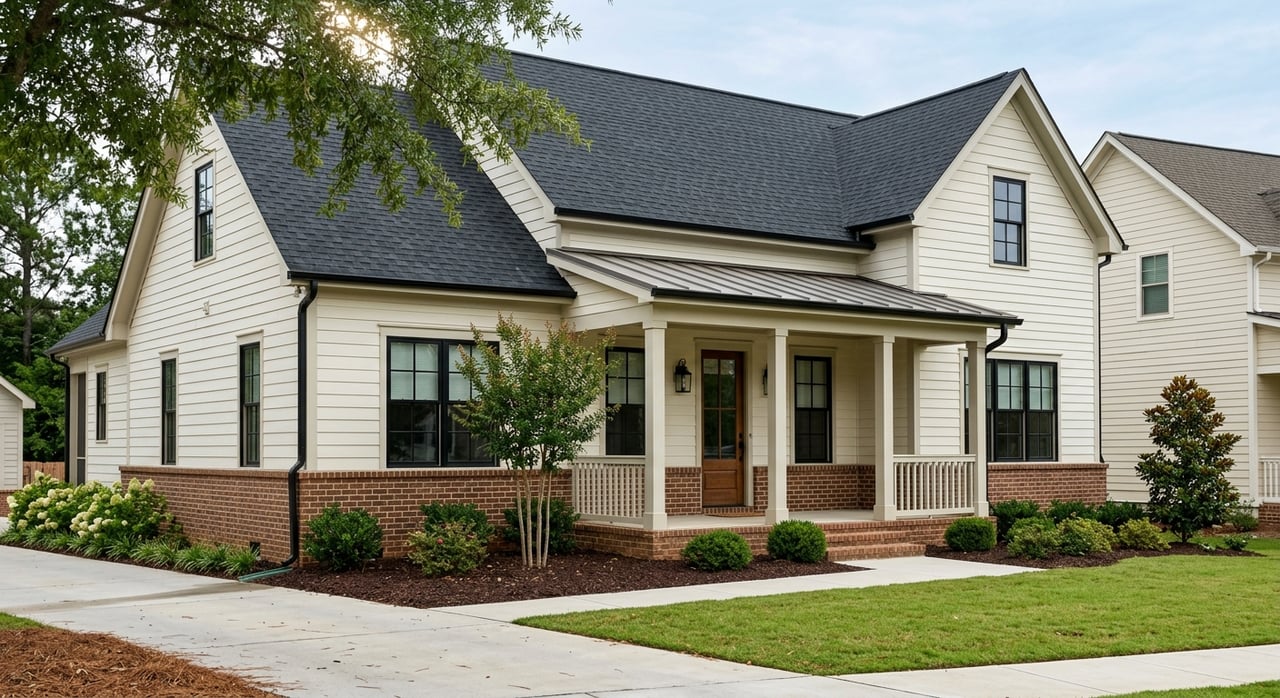
Comparing Indian Land New Construction Communities
July 2, 2026
July 2, 2026
If you are eyeing a brand-new home in Indian Land, it can be tempting to pick the prettiest model, the newest amenity center, or the builder with the flashiest marketing. But in a fast-growing part of Lancaster County, a smart decision usually comes from comparing the details that will shape your daily life long after move-in day. This guide will help you evaluate new construction communities in Indian Land with more clarity, so you can build a short list that fits your budget, routine, and goals. Let’s dive in.
Indian Land is in Lancaster County’s unincorporated southern panhandle, so growth is guided by county land-use rules rather than a town zoning code. Lancaster County handles rezonings, preliminary plats, development agreements, and major subdivisions in the area, and the county has also been updating both its Unified Development Ordinance and comprehensive plan.
That matters because new construction in Indian Land is not just a passing trend. County planning documents note that a large share of the southern panhandle has been undeveloped or underdeveloped, which helps explain why new communities continue to shape the local housing market.
For you as a buyer, that means today’s community features are only part of the story. Future road patterns, nearby retail growth, additional housing phases, and evolving land use can all affect how a neighborhood feels over time.
A beautiful floor plan can pull you in fast, but the better first question is how you want to live. In Indian Land, many of the most important tradeoffs come down to maintenance level, yard space, amenities, and commute tolerance.
If you want lower upkeep and a lock-and-leave feel, a townhome or low-maintenance community may be the better fit. If you want more interior space, more privacy, or a fuller amenity package, a single-family community may rise to the top.
This sounds simple, but it can save you time. Instead of touring everything, you can focus on communities that match your stage of life and daily routine from the start.
One of the easiest mistakes in new construction is assuming the advertised lot tells the full story. Public builder pages often include disclosures that the home’s actual placement on the lot will be determined by the site plan and plot plan.
That means you should verify more than just the lot number. Ask to review the recorded plat or site map and pay attention to:
In Indian Land, this is especially important because stormwater and runoff are active local issues tied to rapid growth. Lancaster County says its stormwater program monitors new construction sites in the area, so drainage design is not a minor detail.
Builder reputation matters, but not just in the broad national sense. In Indian Land, a practical comparison is whether the builder has an active local presence and is consistently delivering homes in the area.
Lancaster County’s March 2026 permit report shows active permits in the Indian Land area tied to builders including Pulte, Toll Brothers, Taylor Morrison, and True Homes, among others. That kind of activity can give you a useful signal that multiple established builders are actively working in this market.
As you compare builders, focus on public signals such as:
A builder can have a strong overall reputation and still offer a product that is not the best match for your goals. The right question is not just “Is this builder well known?” but “Does this builder’s product and process fit the way I want to buy and live?”
In Indian Land, HOA structure deserves serious attention. South Carolina law defines a homeowners association as the entity created to manage and maintain a planned community or similar property regime, with assessments tied to common elements and related expenses.
That means your HOA packet is not background paperwork. It can shape your recurring costs, property use, maintenance responsibilities, and access to community information such as budgets and governing documents.
Before you narrow your list, review:
If a community advertises low-maintenance living, make sure you understand exactly what that means in practice. Lawn care, exterior upkeep, and common-area maintenance can vary widely from one neighborhood to another.
It is easy to assume the community with the biggest amenity package offers the best value. In Indian Land, that may not always be true.
Lancaster County lists several county-owned recreation assets in the area, including the Indian Land Recreation Center, Walnut Creek Park with a 3.5-mile trail, Bailes Ridge Nature Trail, Deputy Roy Hardin Park, and Harrisburg Athletic Complex. For some buyers, nearby public recreation can reduce the need to pay more for a private amenity-heavy neighborhood.
This is where lifestyle fit becomes very personal. If you will use the pool, pickleball courts, clubhouse, or fitness spaces every week, those features may be worth the cost. If you mainly want access to trails, parks, and open-air recreation, public facilities may cover more of your needs than you expect.
A community can look close to everything on paper and still feel frustrating during peak travel times. In Indian Land, US-521 is the main corridor, and South Carolina traffic counts showed about 32,300 vehicles per day on the segment from SC 160 to the North Carolina line in 2023.
The county’s Southern Panhandle plan also points to traffic pressure and the need for collector roads, turn lanes, and regional coordination. It notes that some approved developments are expected to add turn lanes and other road improvements, but buyers should still expect growth to continue before road relief fully catches up.
So when you compare communities, do not stop at drive-time estimates. Pay attention to:
A five-minute difference on a map can feel much bigger when access is difficult during school or work traffic.
Utilities are not the most exciting part of a home search, but they can affect both cost and convenience. A large portion of water and sewer service in unincorporated Lancaster County is provided by the Lancaster County Water and Sewer District.
At the same time, county stormwater staff monitor both new construction and existing development in Indian Land. That makes it wise to ask early about utility availability, drainage design, and any ongoing fees tied to stormwater or related infrastructure.
These details can affect your day-to-day ownership experience and future resale appeal. They are worth understanding before you fall in love with a homesite.
Harris Mill by Lennar is a single-family community that was listed as temporarily sold out, with a next phase referenced for spring 2026. Publicly shown plans on the page viewed ranged from about $612,999 to $708,999.
The community’s amenity package includes a clubhouse, swimming pool, and pickleball courts. For buyers comparing move-up options with a stronger amenity focus, Harris Mill is a useful benchmark.
The Pines at Sugar Creek by Toll Brothers is a 55+ Regency community near Ballantyne. Its public page showed two collections, Journey and Excursion, priced from $545,995 and $617,995.
This community is positioned as low-maintenance, with lawn care provided and amenities that include an exclusive club, pool, fitness center, pickleball courts, tennis, bocce, and a fire pit. If you want a resort-style active-adult option in Indian Land, this is one of the clearest examples.
Creek Water Townhomes by Ryan Homes is designed around low-maintenance townhome living. The public description highlights 3-bedroom, 2.5-bath homes with a finished rec room, an optional guest-suite conversion, wooded views, and a future pool and cabana.
Ryan Homes also positions the community around convenience, with proximity to Ballantyne and nearby shopping. For buyers who value easier upkeep and location over yard size, this is a strong comparison point.
Pulte’s Kinsdale community is marketed around privacy, wooded surroundings, on-site amenities, and access to Highway 521. The Stonebrook plan was shown starting at $519,990, with 4 to 6 bedrooms, 2 to 5 bathrooms, and 2,744 square feet.
The community page lists amenities including a pool, cabana, pickleball court, and tot lot. Pulte also notes that community association and golf fees may be required, which makes this a good reminder to look closely at recurring costs as you compare neighborhoods.
When you evaluate a new construction community in Indian Land, you are also buying into a larger growth pattern. Lancaster County’s development activity report shows active permits in places like Kinsdale, Sugar Creek, and The Ridge at Sugar Creek townhomes, which suggests the area remains in an active build-out phase.
The Exchange at Indian Land is one of the biggest current growth signals on the corridor. According to Lancaster County, the 130-acre project on US-521 includes Costco and Lowes Foods, with additional restaurant, bank, coffee shop, and medical office space, plus 320 for-sale townhomes and 400 apartments planned for 2027.
The county’s 2025 multifamily summary also shows added density from projects such as The Exchange apartments, Redstone Phase II apartments and townhomes, Tapestry, and Lodges. For you, that creates a clear tradeoff: future convenience may improve, but traffic and construction activity may rise too.
The best way to evaluate new construction communities in Indian Land is to compare the pieces that affect your life after closing. That usually means matching homesite feel, HOA structure, builder style, amenities, and commute reality to your real priorities.
In many cases, townhomes and low-maintenance communities make the most sense when predictability and convenience matter most. Larger single-family and active-adult communities may be a better fit when privacy, yard space, or robust amenities carry more weight.
If you want a thoughtful local perspective as you compare neighborhoods, builders, and daily-life tradeoffs in Indian Land, LaRay Hampton can help you sort through the details and build a short list that truly fits how you want to live.
Stay up to date on the latest real estate trends.
Known for her personalized approach and dedication, LaRay ensures a seamless buying or selling process. Trust her to provide attentive, professional service and skillful negotiation to achieve your real estate goals.